Pages

Showing posts with label devotion. Show all posts

Thursday, December 6, 2012

Religious But Not Spiritual


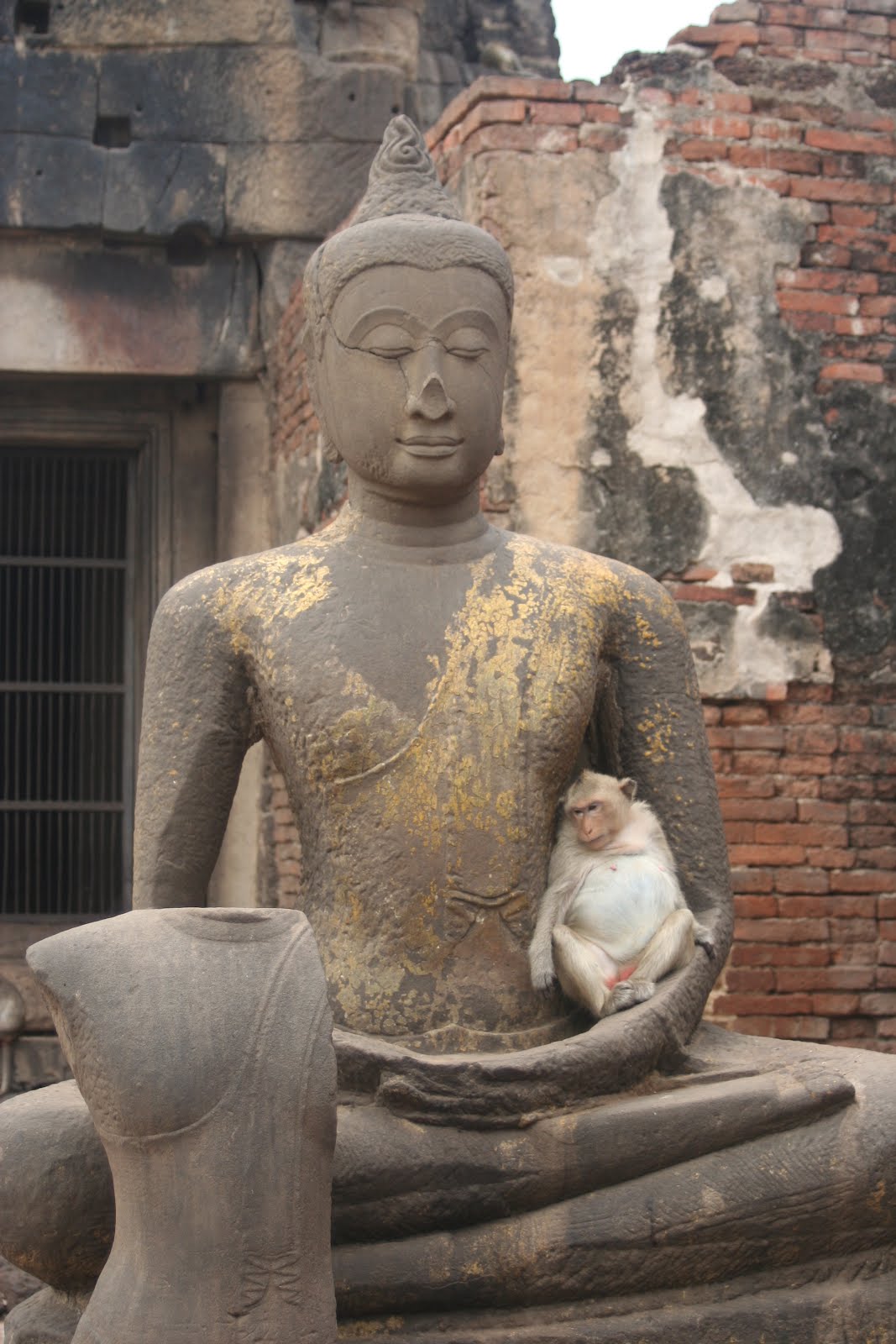
My favorite photo from Thailand: a RBNS macaque in Lop Buri. 
If spiritual but not religious (SBNR) is the movement that lulls the secular masses into a false sense of spiritual security, then religious but not spiritual (RBNS) is the equivalent amongst regular church goers. Whether it is the temple-going-returned-missionary whose apostasy you never saw coming, or your Christian friend whose lifestyle betrays no evidence of their born-again-and-go-to-church-every-Sunday faith, it is far too common for comfort. These are ever-present reminders that outward religiosity does not equate to actual spirituality.

Elder Donald L. Hallstrom spoke to the risking trend of RBNS in the church in the April 2012 General Conference: 

Some have come to think of activity in the Church as the ultimate goal. Therein lies a danger. It is possible to be active in the Church and less active in the gospel. Let me stress: activity in the Church is a highly desirable goal; however, it is insufficient. 

In Mormon circles, there is a great tendency to equate regular church attendance with having it all together spiritually. Most of us are guilty of going to lengths to cover our blemishes prior to showing up at sacrament meeting. Like a good actor, we’re ‘in character’ for at least three hours every Sunday. Often, we become so good at it that our audience starts to believe it.

In all honesty, I wouldn’t have it any other way. We need as much practice as possible in being the person we would really like to be. But there is a fine line between putting on our Sunday best (literally and figuratively) and trying to appear to be someone we’re not. 

I love the assessment of Fr. James Martin who speaks out against the perils of both RBNS and SBNR:
Religion without spirituality becomes a dry list of dogmatic statements divorced from the life of the spirit. This is what Jesus warned against. Spirituality without religion can become a self-centered complacency divorced from the wisdom of a community.
RBNS is every bit as unproductive for the pious as SBNR is for the secular. In truth, outward religious behavior that is not mirrored by internal spirituality is an "abomination" in God’s eyes. The Lord said “they draw near to me with their lips, but their hearts are far from me (Joseph Smith History 1:19).”  For the purposes of this post, the Good News Translation of Isaiah 29:13 is very instructive (here for KJV):

The Lord said, “These people claim to worship me, but their words are meaningless, and their hearts are somewhere else. Their religion is nothing but human rules and traditions, which they have simply memorized. (GNT Isaiah 29:13)

The Lord is not interested in lip service, but "requireth the heart and a willing mind" (D&C 64:34). It is far easier to memorize the rules and customs of a religious tradition and intermittently perform it's associated rites than it is to actually be spiritual—at least as defined by God (Romans 8:5-8). To do so is the essence of being RBNS.  The RBNS have "a form of godliness, but [deny] the power thereof" and spend their efforts "ever learning [but] never able to come to the knowledge of the truth" (2 Timothy 3:5, 7). In some cases it is a deliberate attempt to appear to be something we are not. In most cases, it is unintentional. Either way, it amounts to Christianity-Lite. Though it may taste great, it is less definitely less filling. 

Elder Hallstrom went on to say: "we need the gospel and the Church. In fact, the purpose of the Church is to help us live the gospel." You can't have one with out the other.


Saturday, December 1, 2012

Spiritual But Not Religious

Fr. James Martin is a Jesuit that takes issue with SBNR at Busted Halo 

I’ve never met Reverend Lillian Daniel, but hearing her call out the spiritual but not religious (SBNR) crowd on this podcast made me an instant fan (listen to her 3 minute audio clip here, transcript here). 

Being privately spiritual but not religious just doesn't interest me. There is nothing challenging about having deep thoughts all by oneself. What is interesting is doing this work in community, where other people might call you on stuff, or heaven forbid, disagree with you. Where life with God gets rich and provocative is when you dig deeply into a tradition that you did not invent all for yourself. 


I particularly enjoyed her jab about sunsets and beaches.  So true!
Fortunately, Reverend Daniel is not the only one that is standing up to the SBNR. Alan Miller sums things up nicely as well:

. . . the spiritual but not religious reflect the "me" generation of self-obsessed, truth-is-whatever-you-feel-it-to-be thinking, where big, historic, demanding institutions that have expectations about behavior, attitudes and observance and rules are jettisoned yet nothing positive is put in replacement.

OUCH! It turns out that SBNRism is pretty prevalent. A 1999 Gallup poll on American religious life found that 38% of respondents identified themselves as SBNR. A USA Today poll in 2010 found that 72% Millenials describe themselves using terms like SBNR. Furthermore, two thirds of the respondents that identified themselves as “Christian” did not pray, read the Bible, and rarely or never attend worship services. Not good.

SBNRism is a very convenient philosophy for those trying to find the perfect Laodicean temperature on the ‘commitment to God’ scale (i.e. – lukewarm; see Revelation 3:14-16). It enables the adherent to rationalize the dissonance between the moral absolutes that have been the hallmark of organized religion for 6000 years, and the desire to live without boundaries. The formula is fairly simple: reject organized religion and embrace a spirituality that is so abstract that it can’t be judged by anyone but yourself. In one fell swoop you are free of all the structure, demands and effort of religious devotion, while still proclaiming that you are every bit as spiritual as devoted churchgoers.

SBNRism is really just another incarnation of the self-indulgent spirituality of the Zoramites (see a related post here; see also Alma 31). An even better comparison is  the belief system of King Lamoni:

Now this was the tradition of Lamoni, which he had received from his father, that there was a Great Spirit. Notwithstanding they believed in a Great Spirit, they supposed that whatsoever they did was right . . . (Alma 18:5). 

I must admit there is a certain appeal from the notion that you can do no wrong. But as comfy as things feel for those that consider themselves SBNR, there remains a big problem: there are moral absolutes and man cannot save himself from sin when he violates these absolutes. I stand with the SBNR on the awesomeness of sunsets. But let's face it—they can't save you.

The decline of religiosity and increasing secularism of our society represents a greater threat to our peace and prosperity than the economy, the national debt, poverty or any other problem I can think of. I find it curious that the response of church leadership today in reaching out to those that think of themselves as SBNR is similar to the approach Alma used for reclaiming the Zoramites.

And now, as the preaching of the word had a great tendency to lead the people to do that which was just—yea, it had more powerful effect upon the minds of the people than the sword, or anything else, which had happened unto them—therefore Alma though it was expedient that they should try the virtue of the word of God. (Alma 31:5)

As a result of the lowered age requirements for missionary service, the world—and North America in particular—will see LDS missionaries in unprecedented numbers teaching the gospel of Jesus Christ. Unlike SBNRism, it does have the ability to save. As the perils of moral relativism and secularism surge, it makes great sense that the church ‘try the virtue of the word of God.’