Pages

Showing posts with label LDS. Show all posts

Wednesday, October 10, 2012

Invictus: To Tame the Unconquerable

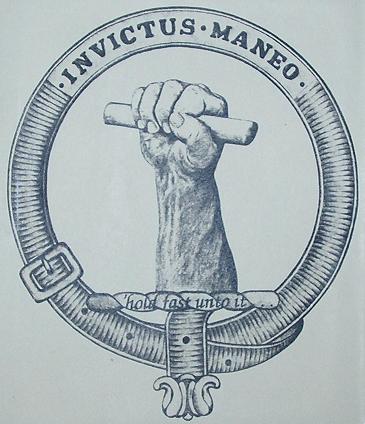
Armstrong Clan Motto: 'I Remain Unconquered'

My recent post (An Unconquerable Spirit) has me thinking of a poem that has ever inspired me. Invictus was penned in 1875 by the English poet William Ernest Henley.  As an adolescent Henley was afflicted with tuberculous osteomyelitis (tuberculosis of bone) in his lower extremities.  He was told that both his legs would need to be amputated below the knees to save his life. He agreed to amputation of the left leg at 12 but repeatedly refused the second amputation. He spent much of his early life hospitalized and chronically ill. Eventually with the assistance of Dr. Joseph Lister, the father of antiseptic surgery, Henley was able to recover and enjoy a vigorous life until a fall from a railway carriage induced a relapse of his tuberculosis and ultimately his death at 54.  

Though plagued by ill-health and disability from an early age, Henley was highly acclaimed and reasonably successful in his life. Henley's theology was that of an agnostic; he was much more interested in the humanist movement than in organized religion or Christianity. And, in an era were people looked to God for rescue, he maintained that the harnessing the power within was sufficient to tackle anything that life could throw at you. 

Invictus is a Latin term for unconquerable, unvanquished or undefeated. Henley's poem is a window into his own spirit of invictus that was shaped by his irrepressible determination and self-confidence. Without doubt, this is part of what gave Henley the willpower to overcome years of illness, despair, and misfortune.  Even a small measure of his spirit of invictus would serve us all very well. 

William Ernest Henley (1849-1903)

Invictus
William Ernest Henley

Out of the night that covers me,
Black as the Pit from pole to pole,
I thank whatever gods may be
For my unconquerable soul.

In the fell clutch of circumstance
I have not winced nor cried aloud.
Under the bludgeonings of chance
My head is bloody, but unbowed.

Beyond this place of wrath and tears
Looms but the Horror of the shade,
And yet the menace of the years
Finds, and shall find, me unafraid.

It matters not how strait the gate,
How charged with punishments the scroll,
I am the master of my fate:
I am the captain of my soul.
- - - -
There is a certain machismo and that comes from the 'never surrender and never back down' mentality that embodies Invictus. I suppose that in this regard Henley was generations ahead of his time--the era of self-help is firmly ensconced today. But the precosciousness of Henley's popular poem raised some eyebrows in the Christian communities of his time. Enter Orson F. Whitney. Born in Salt Lake City, he was a journalist, historian, poet, academic and politician. He also served as an apostle of the Church of Jesus Christ of Latter-day Saints. As a devout disciple of Jesus Christ, he took issue with the spirit of invictus that suggested that a 'do it yourself' mentality was all men really needed.  His poetic rebuttal,The Soul's Captain, is masterful. 
Orson F. Whitney (1855-1931)
The Soul's Captain
ORSON F. WHITNEY

Art thou in truth? Then what of Him
Who bought thee with His blood?
Who plunged into devouring seas
And snatched thee from the flood,

Who bore for all our fallen race
What none but Him could bear--
That God who died that man might live
And endless glory share.

Of what avail thy vaunted strength
Apart from His vast might?
Pray that His light may pierce the gloom
That thou mayest see aright.

Men are as bubbles on the wave,
As leaves upon the tree,
Thou, captain of thy soul! Forsooth,
Who gave that place to thee?

Free will is thine- free agency,
To wield for right or wrong;
But thou must answer unto Him
To whom all souls belong.

Bend to the dust that "head unbowed,"
Small part of life's great whole,
And see in Him and Him alone,
The captain of thy soul.

- - - -
There is no doubt that the spirit of invictus embodies a courage and determination that is valuable in taking on the world, and the challenges it will throw our way.  But to place all our hopes and dreams in self is risky. Most people are simply not prepared for disappointment and failure on the scale invoked by the consistency of our own failings. Though time teaches us to expect others to disappoint us, we never get over our ability to disappoint ourselves. To be so completely invested in the spirit of invictus is futile when we are--from the outset--so flawed. This is especially true when we have a loving Father in Heaven who is perfect (Matthew 5:48). He stands ready and waiting to bless us, comfort us and lighten our burdens as soon as we ask (Matthew 7:7-11). Taken to extremes, the spirit of invictus would persuade us not to ask.

The perspective of Elder Whitney is crucial in recognizing that there are some things we can't do for ourselves. On our own we are hopelessly flawed and simply can't change this without a Savior. Though Henley's spirit of invictus is laudable, to be healed we still must turn to Christ, tame that unconquerable soul and surrender our sword to Jesus Christ--the Captain of our soul.

Wednesday, October 3, 2012

Mormon's 'Great and Terrible' Leitmotif in 3 Nephi 8

Leitmotif associated with Siegfried
from Richard Wagner's opera Siegfried - The Ring of the Nibelung
The concept of a leitmotif is a musical or literary theme that becomes associated with a particular person, place or  idea in a larger work.  Wagner is one of the earliest classical composers that used this.  Perhaps the best contemporary examples are John Williams' use of leitmotif in Star Wars (here for a great example).

The Book of Mormon holds many examples of literary leitmotif. In the case of 3 Nephi 8, Mormon uses 'great and terrible' (or sometimes these words individually) as a leitmotif throughout the chapter:
  • great doubtings and disputations (verse 4)
  • great storm (verse 5)
  • great and terrible tempest (verse 6)
  • terrible thunder (verse 6)
  • great and terrible destruction in the land southward (verse 11)
  • more great and terrible destruction in the land northward (verse 12)
  • exceedingly great quaking of the whole earth (verse 12)
  • great mourning and howling and weeping among all the people (verse 23)
  • great were the groanings of the people (verse 23)
  • darkness and the great destruction which had come upon them (verse 23)
  • 'O that we had repented before this great and terrible day' (verse 24)

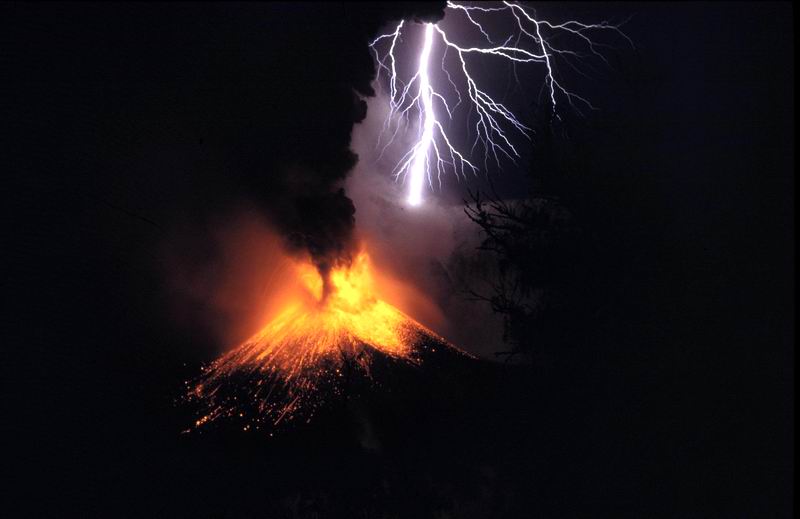
Mount Rinjani Eruption
Lombok, Indonesia
1994
Perhaps a goal Mormon's use of this theme was an attempt to unify the message of his life's work of abridging the Nephite record. The writings of Nephi show surprising literary sophistication in the opening pages of the Book of Mormon by his repeated use of word images and symbolism (probably a post unto itself).  For example, Nephi used the very same terms to describe 'the great and spacious building' of Lehi's dream (1 Nephi 12:4-5; 2 Nephi 26:3), 'the great and abominable church'  (1 Nephi 13:4-6; 1 Nephi 14:15-17) and the 'great and terrible tempest' that threatened Nephi's ship while sailing to the Promised Land (1 Nephi 18:13). Nephi tagged these events and ideas with the word great or the phrase great and terrible. Nephi subsequently linked them to things such as the pride of the world, the church of the devil or personal apostasy.  Finally to complete the message, he links this unrighteousness with the eventual outpouring of the wrath of God in great and terrible ways.  It seems that Mormon took notice.

I think it no small coincidence that the pride of the people was the proximate cause of their destruction at the time of Christ's death (3 Nephi 6:14-16).  After many warnings and opportunities to repent and return to the Lord, his wrath was unleashed in great and terrible ways--just as Nephi and Samuel had foretold (here for an awesome article that explains this event geologically).  Mormon was undoubtedly reiterating the prophecies of earlier prophets that had foreseen this great and terrible day. No doubt, he also used similar words as Samuel (Helaman 14:20-27) and Nephi (see 1 Nephi 12:4-5, 2 Nephi 26:3), who had seen it before it occurred.

Mormon may have also been tying into Hebraic ideas of the attributes of God. Today we find it a bit ironic to find 'great and terrible'  as terms associated with God (here for my post on The Fierceness of God).  Daniel prayed to "great and dreadful God" (Daniel 9:4) and David praised God's "great and terrible name" (a name which was simultaneously holy; Psalms 99:3).   Perhaps these were fitting for a God who fought their battles, destroyed their enemies and poured out his wrath on the unrighteous. For those that experienced that fateful day in 3 Nephi 8, few would disagree with Daniel or David.

Mormon's "great and terrible'  leitmotif therefore represents God's unrestrained wrath on those that have hearts hardened by pride and an unconquerable spirit that refuses to believe, and never understands and never bothers to repent or come to Christ. Though the day could be viewed as great in goodness because of the ministry of the Savior to the survivors, it was mostly a very bad day that was great in terribleness. What made it greatly terrible was the hardened hearts of the people that wouldn't believe and could not be converted. They simply never repented and ran out of time.

I think that if Wagner or Williams were asked to score Mormon's leitmotif it would be loud, dark, and somewhat chaotic . . . not the kind of music I prefer at all.


Sunday, September 30, 2012

Chiasmus in 3 Nephi 10

I'm continually impressed with the literary sophistication of the Book of Mormon--yet another testimony of it's veracity for me.  Much has been written about Book of Mormon examples of chiasmus, a rhetorical arrangement of concepts that was particularly common in ancient Hebrew writings. Chiastic form is common in the Old Testament, particularly when read in Hebrew. This rhetorical tool was extensively used a an aide-memoire in times when you couldn't easily jot down important things in a notebook (or smart phone).


An instance of chiasmus which I've not seen pointed out before sprang from the page as I read the words the Savior spoke to the Nephites and Lamanites that survived the 'great and terrible' day of his death (3 Nephi 10:4-6).

In this case, the chiastic structure is as follows:
a
  b
    c
    c
  b
a 

  b
a
    c
  b
a'
    c'

a = fallen people
a’ = people spared by the Lord
b = house of Israel
c = hen gathering her chickens
c’ = hen gathering her chickens, if they repent and return


Here is the exact text of 3 Nephi 10:4-6 in the chiastic structure. 

a) O ye people of these great cities which have fallen,
b) who are descendants of Jacob, yea, who are of the house of Israel,
c) how oft have I gathered you as a hen gathereth her chickens under her wings, and have nourished you.
c) And again, how oft would I have gathered you as a hen gathereth her chickens under her wings, yea,
b) O ye people of the house of Israel,
a) who have fallen; yea,

b) O ye people of the house of Israel, ye that dwell at Jerusalem,
a) as ye that have fallen; yea,
c) how oft would I have gathered you as a hen gathereth her chickens, and ye would not.
b) O ye house of Israel
a’) whom I have spared,
c’) how oft will I gather you as a hen gathereth her chickens under her wings, if ye will repent and return unto me with full purpose of heart.

It is hard for me to read this and not 'glory in the Lord' even unto 'boasting in my God' and his restored gospel. Yet all these evidences seem to fall well short of persuading everyone.  

I saw a recent blog and article about Brandon Flowers, lead singer of The Killers, as he shared his faith on a Norwegian talk show. His host's intent was initially veiled--until they blind-sided Brandon by bringing out Richard Dawkins, one of the most vocal atheists of popular culture. In his personal attack on Flowers (and Mormonism in general), Dawkins dismissed the Book of Mormon as "an obvious fake" because it was "a 19th century book written in 16th century English".  Mr. Dawkins made a big deal about his conclusions after he "read" the Book of Mormon, but then quietly admitted that he had not read it all. He almost certainly didn't apply Moroni's formula to know of its truthfulness, since this falls outside of the paradigm of his science (it seems his blind devotion to his science is as strong as that which he criticizes in Brandon's faith). The nuances of ancient Hebrew literary tools being "faked" by an uneducated Vermont farm-boy will never persuade Mr. Dawkins that he may have failed to consider all the evidence. He has already decided.  

I've seen the scientific method fail many times during my medical research years, primarily because the investigator draws their conclusion prior to considering all the evidence, or because they allow their bias to influence their interpretation of the results.  The conclusion is written before the data have been fully vetted or analyzed; frequently the interpretation is out of context. It is critical to point out in these cases that it is not the scientific method that has failed but rather the investigator that has failed. 

This interview demonstrated a group of people that just couldn't understand the testimony of Brandon Flowers--largely because of their unbelief a priori. Mormon taught that in such cases, the quest for understanding is over before it starts:

"Because of their unbelief, they could not understand the word of God; and their hearts were hardened." Mosiah 26:3


Saturday, August 25, 2012

The Spirit of Diotrephes & Preeminence


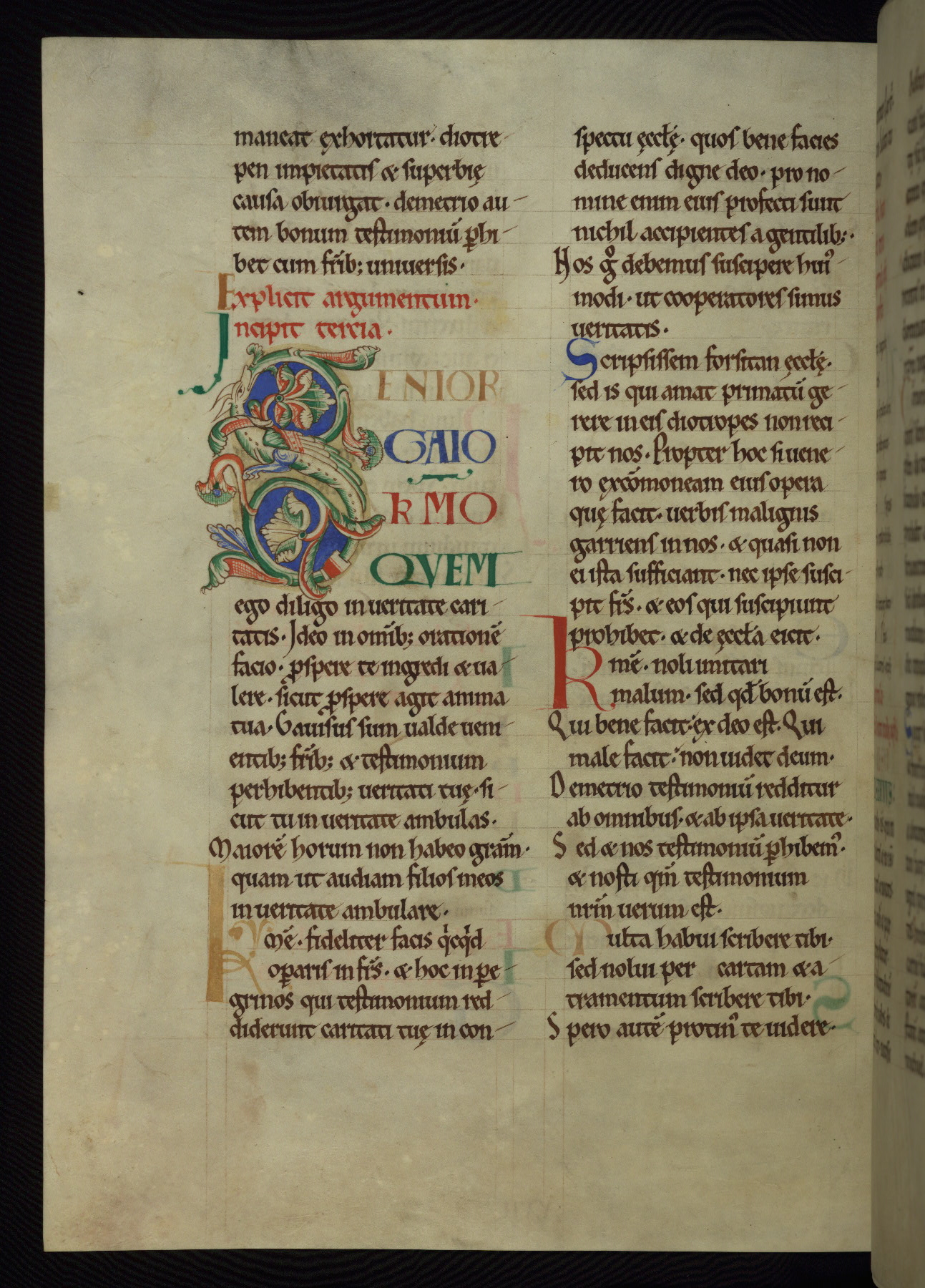
A sinuous dragon disgorging a leafy, flowering stalk, itstail terminating in another leafy vine, forms this letter "S" on the titlepage of the Third Epistle of St. John the Apostle.

Preeminence is one of those superlatives to which we can only hope to aspire.  A word with universally positive connotations: distinction, excellence, prominence, renown, superiority, supremacy, transcendence. If someone or something is preeminent ina group, they are more important, powerful, or capable than other people orthings in the group.

The word preeminence occurs only twice in the KJV of the New Testament. In Colossians 1:18, Paul uses the word proteuo [G4409- translated as preeminence in KJV, means to be first or foremost] to describe Jesus Christ.[1]  If ever one can be called preeminent, it is the Savior.  The word preeminence also appears in John's third epistle as he publicly castigates a shadowy person named Diotrephes: 3 John 1:9.  In this case preeminence stems from philoproteuo [G5383], which literally means love of being first (philo = love; proteuo = being first). 

I find brief scriptural references to otherwise unknown people fascinating (see my posts on Demas here and here). We know almost nothing about Diotrephes, since his name only appears in this passage.  For me, the ESV translation of this  passage gives clearer insight into who Diotrephes was and what he was like. 

9 I have written something to the church, but Diotrephes, who likes to put himself first, does not acknowledge our authority. 
10 So if I come, I will bring up what he is doing, talking wicked nonsense against us. And not content with that, he refuses to welcome the brothers, and also stops those who want to and puts them out of the church. 
3 John 1:9-10 (ESV)

 Somewhat ironically, his name means 'nourished by Jove'; if you were a superstitious Roman you might think this could lead to preeminence.[2]  But it was not legitimate preeminence that led John to publicly call out Diotrephes. It was Diotrephes' desire to put himself first that brought out John's ire.[3] This desire crippled his ability to acknowledge the authority of one of the Twelve. It suggests he was unwilling to defer to the priesthood leadership of the church. He was certainly prone to backbiting and trash-talking about the the church leaders. Finally, it seems that he was bent on driving out those people that he didn't like. 

Unfortunately, the Spirit of Diotrephes is alive and well; it is manifest in those that cannot (or will not) submit to the authority of God's earthly (albeit imperfect) representatives.  It is heard in the hypercritical appraisals of (admittedly imperfect) women and men that are serving in the church.  It is seen in the attempt to create a church that is so homogenous that there simply is not room for those that don't fit the mold.  

In a word, the character flaws of Diotrephes can be summarized as pride. It is the sin of putting our will, needs, agenda and self-love ahead of God. Ezra Taft Benson called it the universal sin: it's not just the other guy's problem.  

Diotrephes joins a long list of saints that have become defined for their failings.  Whether he got it together or continued to buck the system, we'll have to wait and see.  It seems pretty clear that individually we need to get it together--the sooner the better--and root out the Spirit of Diotrephes from our lives.


[1] In Romans 3:1,Paul uses a related word to describe the lack of preeminence [G4053- perissos] of the Law of Moses, compared to the Law of Christ.
[2] Jovewas the supreme god of the Romans. 
[3]  Itypically associate John 'the beloved' with some of the greatest writings inscripture on love.  But in his third epistle, he was very annoyed and itcomes through loud and clear.


Thursday, August 16, 2012

Parking Lot Encounters

Sometimes you run into the darnedest people in the parking lot! Tate took these pictures of the Big Guy's plates while he & Tiff were shopping at Fry's Electronics (I hesitate to call them vanity plates--He's not at all like that once you get to know Him) .

I'm sure I could wax eloquent about this picture for a long time. I was pleased to see He was in a domestic Minivan rather than a stretch Maybach limo. It is also noteworthy that these are Nevada plates (not Utah). I guess He's putting a little time into this part of the vineyard--I wish I knew which neighborhood He is living in. Hopefully His efforts will help Vegas lose the Sin City moniker and become the New Nineveh.

Undoubtedly this chance parking lot encounter would be less blogworthy if it were at the LV Temple or a Stake Center (or even Deseret Book).  But this was Fry's Electronics! He's mingling with regular people--not General Authorities or Temple Presidents. Wow . . . . it sobers you to think you could just as easily encounter Him at Target or Costco while loading up the cart with 3 or 4 cases of Diet Coke. It's not like He's stalking you . . . but He does knows where you've been and what your loading into the trunk.  It's just like Santa when you were a kid: stuff you've always known, but it still feels eery when you stop to think about it.

My heightened sense of parking lot paranoia not withstanding, Tate's encounter helps me to recognize that important people (especially those that haven't found the gospel yet) are watching us while we are not paying that much attention. Brennan Manning said: “The greatest single cause of atheism in the world today is Christians: who acknowledge Jesus with their lips, walk out the door, and deny Him by their lifestyle. That is what an unbelieving world simply finds unbelievable.” As we claim membership in Christ's restored church, our actions should easily betray that, and regularly offend Satan. Hopefully we have taken the advice of St Francis of Assisi and 'Preach the gospel at all times and when necessary use words.' 


Tuesday, August 7, 2012

Rameumpti


For the Zoramites, the Rameuptom was all about indulging their pride. Yet everything was tidily packaged into something much more socially acceptable: worship. It is SO much easier to rationalize when couched in these terms. 


While teaching Sunday School recently, we spent a few minutes talking about the Rameumptom. Paul Riddle leaned over to Tate and indiscreetly pointed out that my Rameumptom was my new bike. It was pretty funny, and spot on. All I could say was Touche´.[1]

It's sobering to realize the degree to which we become experts in justifying the Rameumpti in our lives.  In this case, words like  fitness, performance, craftsmanship, passion all worked very well.[2] I guess there are some Zoramite tendencies (aka pride) in me that I need to still work on. Even more remarkable is my ability to instantly recognize the Rameumpti of others, even while perched atop one of my own that is so easily justifiable in my own mind. 

This is going to take some time . . . 


[1] In this case 3-4 times a week for at least and hour instead of a few moments on Sunday.
[2] I could go on at length about why I NEEDED the new French road bike with Italian components and tubular wheels.